
Cheer Fundraising
Cheerleading Fundraising Ideas: How to Raise $5,050 for Worlds
Raising money for a major cheer competition can feel impossible when the costs land on individual families and the timeline is short. This guide covers ten practical cheerleading fundraising ideas for Australian families, when to start, how to share a campaign without exhausting your network and how a numbered 1 to 100 board turns a big goal into contributions of every size.

Your athlete's team just earned a bid to a major competition. Maybe it is an interstate national, maybe it is the trip every all star cheerleader dreams about: Worlds in Orlando. The excitement lasts about a day. Then the numbers start arriving, and suddenly you are staring at flights, accommodation, event fees and a spreadsheet that does not balance.
If that is where you are right now, this guide is for you. It covers when to start fundraising, which fundraising ideas actually suit cheer families, how to compare them honestly and how to raise money without exhausting the same small circle of friends and relatives. One of the approaches covered is a numbered fundraising board, the model behind PledgeBoard, an Australian platform built partly out of firsthand experience with exactly this kind of fundraising pressure. It is one option among many, and this article will still be useful if you never use it.
Why cheer competition fundraising feels overwhelming
Cheer travel fundraising is harder than the average school fundraiser for a few reasons.
The costs land on individual families, not a club bank account. When a netball club fundraises, the money goes into one pot. When a cheer team travels, each family usually needs to cover its own athlete, so a team fundraiser only gets you part of the way.
The timeline is compressed. Teams often learn they are travelling only months before the event. The Cheerleading Worlds, for example, is held in Orlando, generally during April, and teams qualify by earning bids at qualifying events during the season. Dates and qualification arrangements vary by season, so confirm the current details with your gym and the official event information. Either way, the gap between "we're going" and "we need to pay" can be short and stressful.
And the audience is small. Most families lean on the same group of grandparents, aunts, uncles, workmates and gym friends for every fundraiser, every season. By the third chocolate drive, everyone is tired, including you.
None of this means the goal is out of reach. It means the fundraising plan matters as much as the fundraising effort.
The costs families typically need to plan for
Every trip is different, so treat this as a planning checklist rather than a price list. For an international competition like Worlds, families commonly budget for:
- Return international airfares, often for the athlete plus at least one parent
- Accommodation for the length of the event, plus buffer nights either side
- Event registration, competition fees and any required travel packages
- Spectator tickets for family members attending
- Uniforms, competition makeup, hair pieces and shoes
- Meals, local transport and travel insurance
- Passports and any visa or entry requirements
- Spending money and a contingency for the unexpected
Interstate competitions trim the airfare and remove the passport line, but flights, accommodation and fees still add up quickly, especially for families sending more than one athlete.
Ask your gym or program director for their best estimate early. They have usually done the trip before and can tell you which costs are fixed, which are optional and which tend to blow out.

When to start fundraising
Earlier than feels natural. The best time to start is the moment travel becomes a realistic possibility, not the moment it is confirmed.
If your athlete is on a team chasing a bid, you can begin low key fundraising during the season. One thing to get right from the outset: if you begin fundraising before the trip is confirmed, tell supporters clearly what the funds will cover and what will happen if the team does not receive a bid or the trip does not proceed. Depending on the circumstances, that may mean offering refunds or checking with supporters before putting the money toward another stated purpose. A single honest sentence on your campaign page sorts this out and saves awkward conversations later.
As a rough guide, give yourself at least three to four months for a four figure goal. That allows time to run more than one fundraising activity, spread the asks across different groups of people and avoid the desperate final fortnight where everything depends on one last push.
Cheerleading fundraising ideas that actually work
Here are ten cheer fundraiser ideas that suit Australian families and gyms. Most families end up combining two or three rather than betting everything on one.
1. A numbered fundraising board
A numbered board turns your goal into a grid of numbers, usually 1 to 100, where each number is a dollar amount a supporter can claim. Someone claims number 7 and contributes $7. Someone else claims number 92 and contributes $92. The board fills visibly as numbers are taken, which gives supporters a reason to share it and a clear picture of progress. More on how this works below.
2. Local business sponsorship
Approach businesses your family already supports: the local physio, cafe, real estate agent or trades. Offer something in return, such as a thank you post on social media, a logo on a team banner or a mention at a showcase. Some local businesses may be willing to support a local athlete because the connection is personal and visible in their own community.
3. Skills clinics
If your gym is on board, senior athletes and coaches can run a paid clinic for younger or newer athletes covering tumbling, jumps or stunting basics. Parents pay a clinic fee, kids get quality coaching and the proceeds go to the travel fund. This works especially well as a school holiday activity.
4. Community performances and showcases
A gym showcase where travelling teams perform their routines for a gold coin or ticketed entry does two jobs at once. It raises money and it gives the wider gym community a reason to feel invested in the trip. Add a bake sale or a raffle table and a single evening can produce a meaningful amount.
5. Event fundraisers
Trivia nights, movie nights and bingo evenings are reliable earners when a few families work together. Venues will sometimes provide a room free of charge, local businesses can contribute raffle prizes and ticket sales plus games on the night do the rest. These take real organising effort, so share the load across the team.
One compliance note for this idea and the previous one: if you include a raffle, bingo or another game of chance, check the applicable state or territory rules and obtain any required authority before promoting it. Requirements differ around Australia, and a quick check with your state regulator before you print tickets is much easier than unwinding a problem afterwards.
6. Product drives and community sausage sizzles
Chocolate drives, pie drives, cookie dough orders and community sausage sizzles are familiar for a reason: they can reliably raise funds when many hands share the load. The margin per sale is small, so they suit teams with plenty of volunteers rather than one family working alone. Check any booking requirements for community barbecue sites well in advance because weekends fill up fast.
7. Garage sales and secondhand markets
A team garage sale, a stall at a local market or selling outgrown cheer shoes and uniforms online costs almost nothing to run. It will not fund a trip on its own, but it is a fast way to seed the travel fund early while bigger activities are being planned.
8. Team challenges
Sponsored challenges give supporters something to cheer for. A flip-a-thon, a jump-a-thon or a team fitness challenge where supporters pledge per rep or make a flat contribution turns training into fundraising. These photograph and film well, which helps the social media side of your campaign.
9. Matched contributions
Some employers offer community grants or matching programs, although many restrict eligibility to registered charities rather than personal fundraisers. Check the program rules with your employer before presenting matching as an option to your supporters. Where a program does cover personal or community causes, a matched contribution can double the value of an existing pledge, so it costs nothing to ask HR the question.
10. A gym-wide fundraising day
If several families are travelling, ask the gym to host a single fundraising day: themed classes, a coach dunk tank, a uniform free day with a gold coin contribution, food stalls run by parents. Concentrating effort into one big day is often easier than sustaining five small activities, and it builds the sense that the whole gym is sending its athletes away.
Comparing the major approaches honestly
No single fundraising idea is best for everyone, so it helps to weigh them on effort, reach and return.
Product drives and sausage sizzles are low risk and familiar, but margins are thin and they lean heavily on volunteer hours. They suit whole teams more than individual families.
Events like trivia nights can raise a lot in one evening, but they carry upfront costs, need a venue and depend on ticket sales. A poorly attended event can leave organisers out of pocket.
Sponsorship can deliver larger single amounts, but it requires confident asking, a clear offer in return and some luck with timing. It rewards families with strong local networks.
Challenges and showcases are great for engagement and social sharing, though the amounts raised vary widely and they depend on gym support.
Online fundraising, whether a numbered board or a general fundraising page, can provide broad reach with fewer event logistics. Its limitation is the opposite problem: with no event or product attached, you need a clear story and a reason for people to pledge. This is where the structure of a numbered board helps, because the board itself gives supporters something concrete to do.
The strongest campaigns usually pair one online method that runs continuously with one or two in person activities that create moments of momentum.
How a 1 to 100 fundraising board works
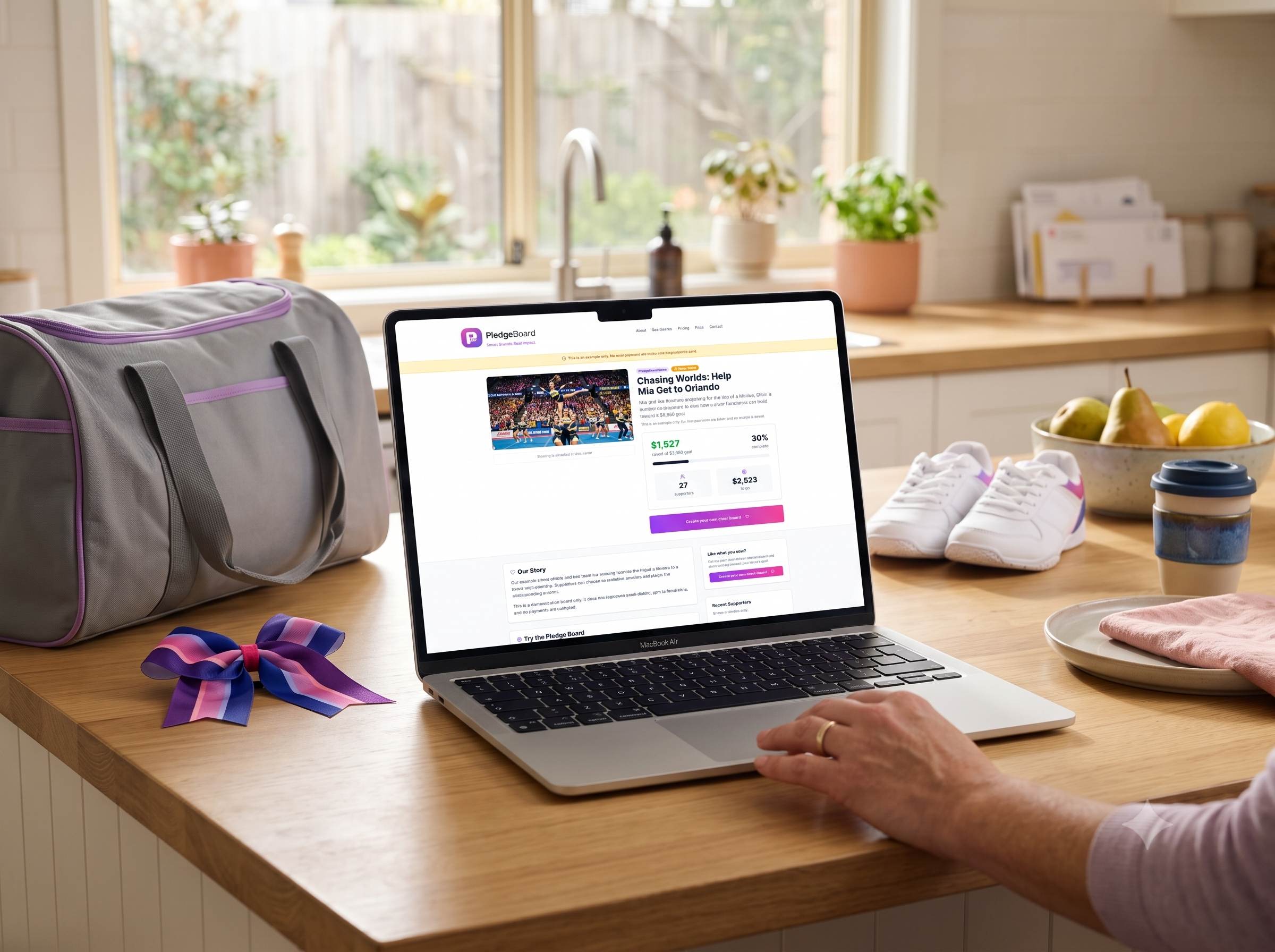
A numbered fundraising board is a simple idea with some clever maths behind it.
You publish a board showing the numbers 1 to 100. Each number represents a dollar amount. A supporter picks any unclaimed number and contributes that amount, so claiming 15 means pledging $15 and claiming 88 means pledging $88. As numbers are claimed they are marked off, and everyone watching can see the board fill.
To be clear about what this is not: a numbered board is not a raffle, lottery or competition. Nobody wins anything and there are no prizes. Choosing a number is simply a way of choosing how much to pledge, wrapped in a format that makes supporting an athlete visible and a little bit fun.
Why 1 to 100 adds up to $5,050
Here is the part that surprises people. Add every number from 1 to 100 together and the total is exactly $5,050. The small numbers and the large numbers balance out: 1 pairs with 100, 2 pairs with 99, 3 pairs with 98 and so on, fifty pairs of $101 each.
That makes a full board a genuinely useful target for competition travel. It is a four figure sum reached without any single person being asked for a four figure gift, and the goal is built into the format rather than picked out of the air.
Room for every kind of supporter
The spread of numbers matters as much as the total. A classmate's family can claim number 5. A grandparent might take 100. A local business could claim two or three high numbers as their sponsorship. Workmates often grab something in the middle.
Because supporters choose their own number, nobody is put on the spot about how much to pledge, and small contributions sit on the board with exactly the same visibility as large ones. If you would like to see the format in action, you can see a cheer fundraising board as a supporter would.
Sharing your campaign without wearing people out
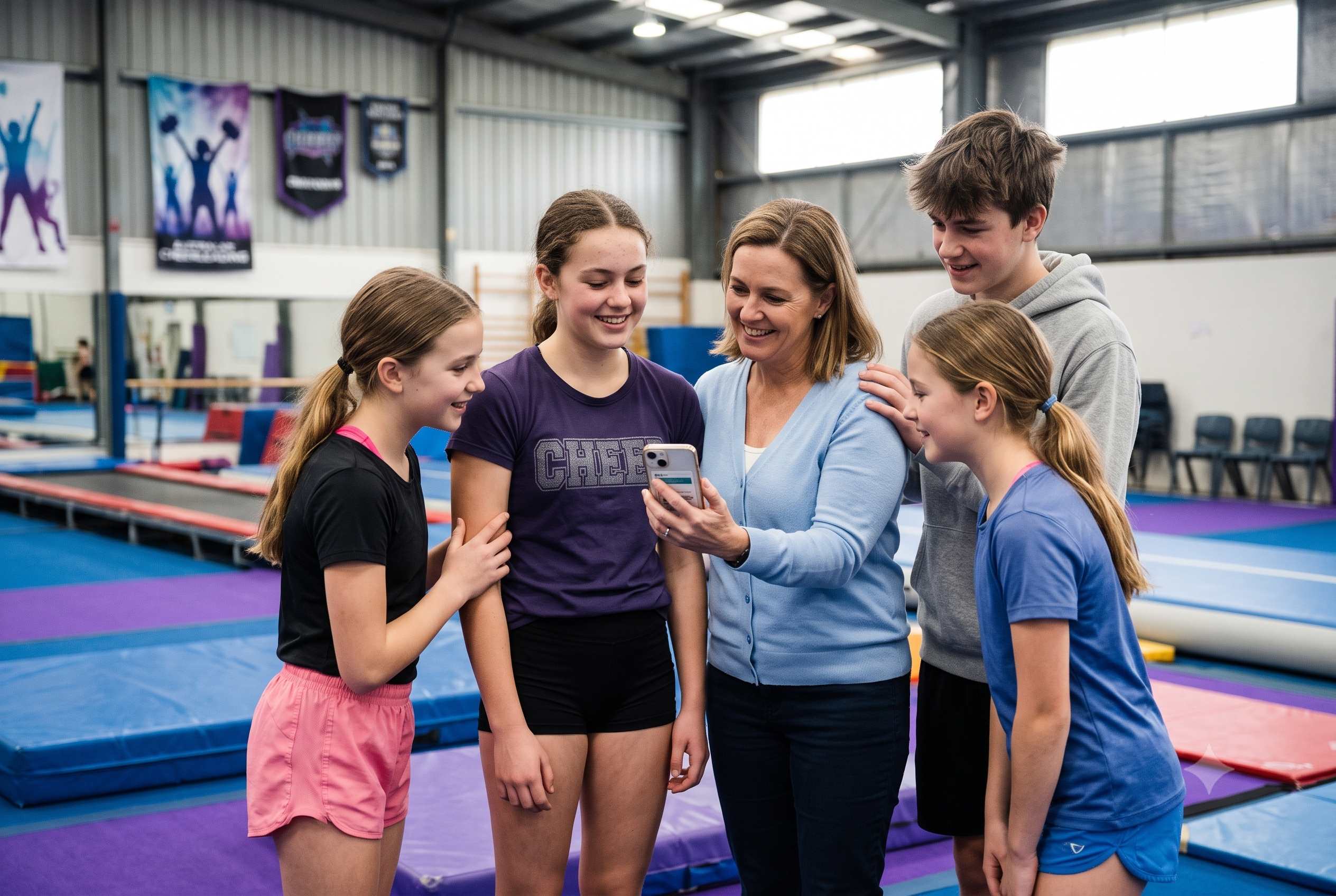
Reach is what separates a board that fills from a board that stalls. The goal is to put your campaign in front of many people once, rather than in front of the same ten people six times.
Start with concentric circles. Immediate family first, then extended family, then close friends, then your gym community, then workplaces, then the wider local community. Each circle gets one clear, warm ask with the link, the athlete's story and a specific suggestion, such as "even claiming a single digit number helps".
Use the gym's channels with permission. A share in the gym's private parents group or newsletter reaches families who already understand what Worlds means and why it costs what it costs.
Give people updates, not repeats. "We're halfway, 50 numbers claimed" is news and travels well. "Please pledge" for the fourth time is noise. Milestones, photos from training and thank yous to recent supporters all give your network fresh reasons to share the link onward, which is how a campaign reaches people you have never met.
Time your pushes around natural moments: when the bid is announced, when flights are booked, when the routine gets its music, at the halfway mark and in the final week.
Getting the money side right
Whatever platform or method you use for online payments, insist on transparency. Before you commit, you should be able to answer three questions: where does the money actually go, who holds it and what does it cost?
With PledgeBoard, the answers are straightforward. Card payments are processed through the fundraiser's connected Stripe account. PledgeBoard does not hold the fundraiser's money or take a percentage cut of pledges. Instead, the platform charges a flat subscription: a Premium board with the full 1 to 100 grid and online card payments costs $19 per month, and you can cancel the subscription once your fundraising is finished.
Standard Stripe card processing fees apply to each card payment, so factor those into your planning alongside the subscription when you compare options.
One tax point worth stating plainly: For a personal athlete fundraiser like this one, pledges are personal support rather than tax-deductible charitable giving. PledgeBoard is not a registered charity or deductible gift recipient and does not issue tax-deductible receipts.
One honesty note that applies to every method in this article: no format can promise results. A board is a structure, not a guarantee. Whether it fills depends on your story, your sharing and your network, and even a full board may cover part rather than all of a major international trip. Plan your budget accordingly.
Privacy and safety for young athletes
Public fundraising means public information, so decide deliberately what you share about a child.
- Use the athlete's first name only on any public page
- Do not publish your home address, and avoid naming the gym's street address
- Keep specifics like school names and training schedules out of public posts
- Prefer photos that do not identify locations, or use team imagery instead
- Let the gym know about the campaign so staff are not caught off guard by enquiries
- Check your gym's and your competition's rules about fundraising and the use of event names or logos before publishing anything
These are PledgeBoard's own recommendations for boards involving young athletes, and they apply equally to a Facebook fundraiser, a flyer on a noticeboard or a story in the local paper. A good campaign tells a compelling story with the minimum personal detail necessary.
It is also worth knowing that fundraising platforms, including PledgeBoard, are independent of the cheer world's governing bodies. PledgeBoard is not affiliated with or endorsed by any cheer federation, competition organiser or event, so avoid wording on your campaign page that could suggest official status.
Your cheer fundraising checklist
- Get a realistic cost estimate from your gym or program director.
- Set a fundraising target and a deadline working back from payment due dates.
- Choose one always-on online method plus one or two in person activities.
- Agree the privacy rules for your athlete before anything goes public.
- Write the story once: who is going, where, when, what the funds cover and what happens if the trip does not proceed.
- Map your circles of supporters and plan one clear ask per circle.
- Launch, then share milestones rather than repeat requests.
- Thank every supporter personally and publicly where appropriate.
- Track money received against the target weekly.
- Afterwards, close everything off: final thank yous, a wrap up post and cancelling any subscriptions you no longer need.
Ready to start?
Fundraising for a major competition is a project, and like any project it goes better with structure, an early start and a way for every supporter to contribute at a level that suits them. Whether you run a trivia night, chase local sponsors, flip your way through a sponsored challenge or combine all three, the families who do best are the ones who plan early and share widely.
If a numbered board sounds like the right anchor for your campaign, you can create your athlete's board online and share its public link with your community when it is ready. Create your athlete's board and let your supporters pick their numbers.
Frequently asked questions
- How much does it cost to run a PledgeBoard fundraiser?
- A Premium board costs $19 per month and includes the full 1 to 100 board with online card payments. PledgeBoard takes no percentage of pledges, and you can cancel the subscription when your fundraising is done. Standard Stripe card processing fees apply to each card payment.
- Is a numbered fundraising board a raffle?
- No. There are no prizes and nothing is won. Supporters simply choose a number as a way of choosing their contribution amount, and the board shows which amounts have been claimed.
- Why does a 1 to 100 board total $5,050?
- Adding every whole number from 1 to 100 gives exactly 5,050. The numbers pair up neatly: 1 with 100, 2 with 99 and so on, making fifty pairs of 101.
- When should we start fundraising for a cheer competition?
- As early as travel becomes a realistic possibility. For a four figure goal, allow at least three to four months so you can run more than one activity and avoid relying on a last minute push. If the trip is not yet confirmed, tell supporters upfront what will happen to the funds if it does not go ahead.
- Is it safe to fundraise publicly for a child athlete?
- It can be, with sensible precautions. Use a first name only, never publish a home or gym address, keep identifying details out of public posts and tell your gym about the campaign before it launches.
PledgeBoard's numbered-board approach was shaped partly by seeing the fundraising pressure experienced by cheer families firsthand. PledgeBoard is an independent Australian platform and is not affiliated with or endorsed by any cheer federation, competition organiser or event.
Sources
- IASF, The Cheerleading Worlds and The Dance Worlds official event page (event location, timing and bid qualification context): https://www.iasfworlds.net/worlds/ (opens in a new tab)
- IASF, The Cheerleading Worlds official event information document (event and qualification context): https://www.iasfworlds.net/wp-content/uploads/2025/12/IASF-TCW-2026-12.15_compressed.pdf (opens in a new tab)